



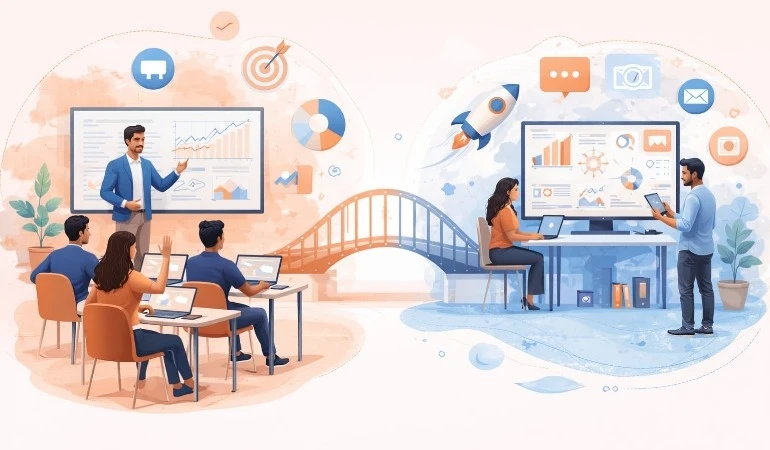
Digital marketing is one of the fastest-growing industries today. Many students learn the concepts of digital marketing in classrooms, but when they start working on real campaigns, they often face several challenges. This mainly happens because there is a noticeable gap between theoretical knowledge and real-world marketing execution.
In modern digital marketing education, it is essential to bridge this gap so students can confidently manage live campaigns. In this article, we explore how classroom learning can be connected with real digital marketing practices and how students can prepare themselves for industry-level campaigns.
How Classroom Learning Can Be Connected With Practical Digital Campaigns
Classroom education becomes truly valuable when it is combined with practical exposure. Digital marketing training should therefore focus on connecting theory with real projects and campaign execution.
This approach helps students understand how marketing strategies work in actual business environments.
What approaches can help connect classroom learning with live campaigns?
• Project-Based Learning where students create small digital campaigns
• Analysis of real brand case studies and marketing strategies
• Hands-on practice with SEO tools, social media tools and Google Ads
• Group projects that simulate agency-style collaboration
• Assignments focused on solving real marketing problems
By implementing these methods, students not only learn concepts but also gain confidence in applying them practically.
Why Practical Experience Is Vital in Digital Marketing Education
Digital marketing is a dynamic industry where trends, tools and algorithms change frequently. Because of this, learning only through theory is not enough for students who want to succeed in the field.
Practical exposure helps learners understand how strategies perform in real environments.
Why is practical experience important?
• Understanding real-time marketing data and analytics
• Learning how to analyze campaign performance
• Developing the ability to learn from campaign mistakes
• Understanding audience targeting and segmentation
• Learning budget planning and optimization strategies
• Developing strategic thinking for marketing campaigns
When students create and manage campaigns themselves, they understand how content strategy, audience targeting and campaign optimization truly work.
How Internships and Live Projects Help Reduce the Learning Gap
Internships and live marketing projects provide students with real work exposure. They help learners understand the expectations and responsibilities of the digital marketing industry.
This experience plays a crucial role in preparing students for professional marketing roles.
What do students learn through internships and live projects?
• Working on real business goals and campaign objectives
• Planning and executing digital marketing strategies
• Implementing SEO, social media and PPC campaigns
• Monitoring and optimizing marketing performance
• Preparing campaign reports and analytics insights
• Collaborating with teams and understanding client requirements
Working on real projects also allows students to learn directly from experienced professionals and mentors.
Which Skills Students Need to Work on Live Digital Campaigns
Running a successful digital campaign requires more than technical knowledge. Students must also develop several soft and analytical skills to manage campaigns effectively.
Important skills required for live digital campaigns
• Content Creation Skills for engaging blogs, ads and social media posts
• Data Analysis Skills to interpret campaign performance
• Creative Thinking to generate innovative marketing ideas
• Communication Skills for teamwork and client interaction
• Adaptability to adjust strategies based on digital trends
• Strategic Planning for building effective marketing campaigns
Developing these skills enables students to confidently manage digital campaigns and solve real marketing challenges.
How Continuous Learning Helps Stay Updated With Digital Trends
The digital marketing industry evolves rapidly with new tools, algorithms and platforms emerging regularly. For this reason, continuous learning is essential for both students and professionals.
Staying updated ensures marketers remain competitive and capable of adapting to industry changes.
How can students continue learning?
• Reading digital marketing blogs, research articles and industry reports
• Participating in online courses, webinars and workshops
• Following industry experts and thought leaders
• Experimenting with new marketing tools and platforms
• Practicing new campaign strategies regularly
Continuous learning helps students remain informed about the latest strategies and improves their professional growth.
FAQs
Classroom learning focuses mainly on theory, while live digital campaigns involve applying those concepts to real marketing activities and analyzing actual campaign performance.
No, digital marketing requires both theoretical understanding and practical experience. Hands-on projects help learners understand how strategies perform in real campaigns.
The most effective way is through internships, live projects and practical campaign creation where students can apply marketing strategies in real scenarios.
Important skills include content creation, data analysis, creative thinking, communication skills and familiarity with digital marketing tools.
Students should work on live projects, gain internship experience, continuously learn new strategies and stay updated with digital marketing trends.
Latest Post
Best AI Tools Every Digital Marketer Should Learn
- Oct 10, 2026
Best Practices for AI-Powered Google Display Ads
- Sep 12, 2026
AI Powered Google Shopping Ads Optimization Tips
- Aug 31, 2026
What is the Future of AI-Powered Search Advertising?
- Jul 10, 2026
How AI-Powered Search Ads Boost ROI
- Jul 03, 2026
How to Easily Find a Job with the Help of AI?
- May 09, 2026
How to Prepare for a Performance Marketing Role?
- Apr 03, 2026
How to Earn Money Using Instagram?
- Jan 22, 2026
How to Become a Job-Ready Digital Marketer in 2026
- Dec 05, 2025
How to Reduce Cost Per Click in Google Ads
- Nov 27, 2025
How Digital Marketing Can Boost Your Career Growth
- Nov 12, 2025
How to Target the Right Audience on Facebook?
- Sep 30, 2025
Facebook Pixel Installation Guide for Beginners
- Sep 19, 2025
My First Facebook Ad What Really Happened
- Sep 04, 2025
What is the Difference Between AEO AIO and GEO
- Aug 28, 2025
Why Facebook Still Matters for Business in 2025
- Aug 25, 2025
How to Create a Facebook Business Page
- Aug 13, 2025
How to Pick the Right Course in Digital Marketing?
- Jun 28, 2025
